

Summer: fresh and full of colour
Berries, garden vegetables and the widest choice of the year. It is also the easiest season to eat well without thinking about it — most of the work is done by freshness.

Nutrition & Daily Energy
Ordinary food, eaten at ordinary times, is what holds energy level through a working day. Here is the daily menu — not a diet plan.
A balanced diet is regular meals with a few consistent components: whole grains or potatoes, vegetables, some protein, and fruit or berries. Estonian food-based guidance recommends whole grains directly and treats porridge and bread as part of the normal daily menu, which tells you how unexotic this is meant to be.
The pattern is balance, not restriction. Skip a meal and the next one tends to be larger, faster and less useful — which is why this page keeps returning to timing rather than willpower.
The usual plate

Porridge is one of the most practical fatigue-prevention tools available in this country. Whole grains release energy more slowly than refined options, so a bowl in the morning tends to carry you further than a pastry. The same logic applies to whole-grain bread at lunch.
Neither is a superfood and neither needs to be. They are simply the base of a daily menu that holds energy steady instead of spiking and crashing. The point is the pattern, repeated, not the ingredient on any single morning.
Seasonality is a feature here, not a limitation. Summer brings berries and fresh vegetables; autumn is for root crops and preserving; winter leans on stored and frozen produce, which keeps nutrition reasonable when little grows.
National health planning in Estonia names unbalanced nutrition as a preventable risk, and eating with the season is one of the easiest ways to stay on the right side of that. Eating a strawberry in July and a frozen one in January is not a compromise — it is how a food year is supposed to work.
Berries, garden vegetables and the widest choice of the year. It is also the easiest season to eat well without thinking about it — most of the work is done by freshness.

Root crops, cabbage, mushrooms and the preserving season. Jars and freezers fill up now so that January does not have to be a fresh-produce argument.
Winter, in practice
Stored roots, cabbage, sauerkraut, frozen berries, and frozen vegetables from the shop. Nutrition stays reasonable and the cooking stays simple, which matters more than the shopping looking seasonal. A handful of frozen berries in a winter porridge is a real habit here, not a fallback.
When you eat matters almost as much as what. A long gap between breakfast and lunch often produces a fast, heavy lunch and a flat afternoon. A steadier pattern, with a light snack if the gap is long, tends to hold energy better.
Caffeine after early afternoon can mask tiredness while quietly damaging the night's sleep — which then worsens tomorrow's slump.
If your afternoons collapse regularly, look at timing long before you look at supplements.
A steadier working day
Protein at each main meal supports satiety and makes it easier to eat reasonable portions without counting anything. Vegetables add volume and fiber for very few calories.
Estonia's obesity action plan pairs nutrition improvement with physical exercise rather than treating food alone, and that combination is also the honest way to think about healthy weight. No single food causes or solves it. The daily pattern, repeated, decides.
What helps at the table
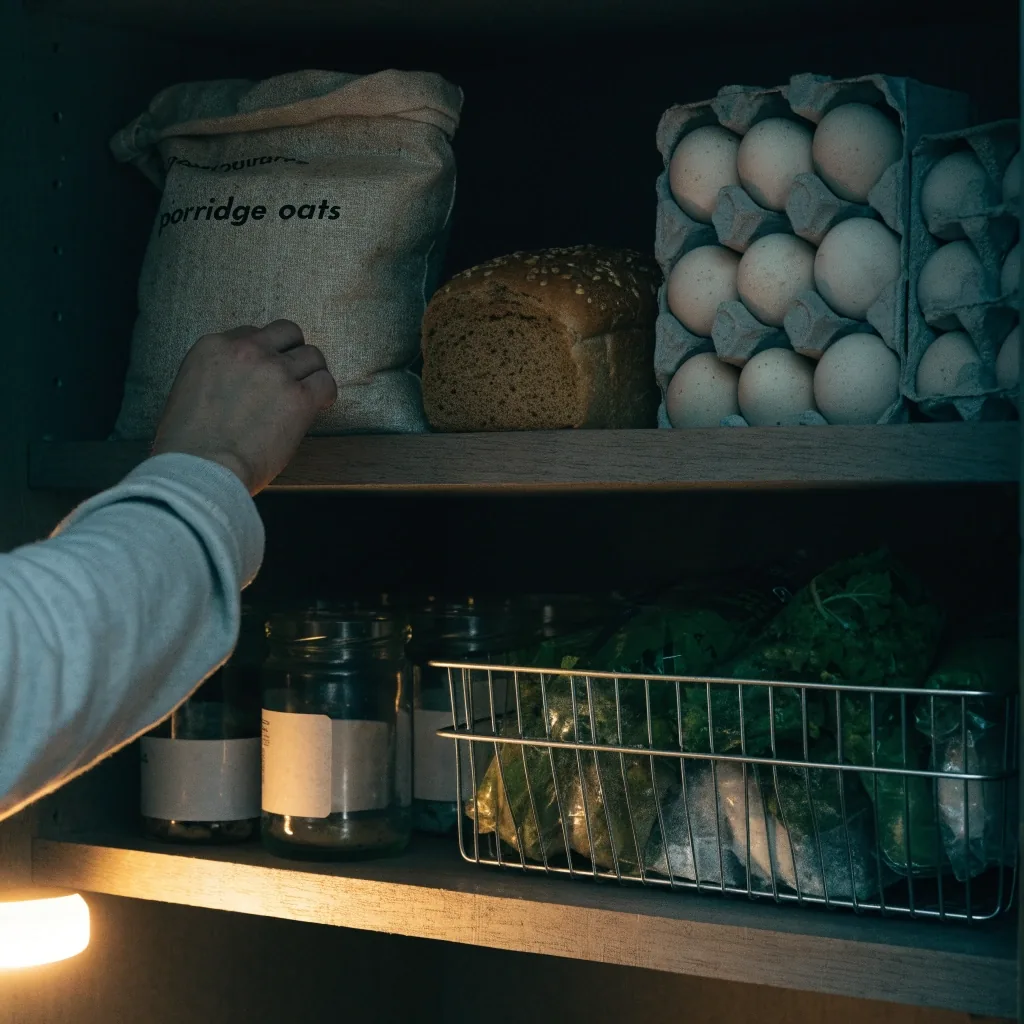
Most people already know roughly what to eat. The gap is logistics: no time to cook, nothing in the fridge, so the nearest option wins. A few defaults help more than willpower.
None of this is exciting, and that is precisely why it works on a Wednesday.

General patterns cover most situations, but some need a closer look. If any of the following has been true for a while, a conversation with a nutritionist is more useful than another article.
It is also worth saying plainly: if your situation involves a diagnosed condition or medication, your doctor should be involved as well. Nutrition advice here works alongside that, not instead of it.
Where to go next
If your sleep is the weaker link, start there. If tiredness has been building for months, read fatigue prevention. Otherwise, describe your week and ask what to change first.
The practice sits at Aida tn 5 in Pärnu, and answers weekdays between 9:00 and 18:00.
From here, the guides that complete this one: whole-grain and seasonal habits hold daily energy, fatigue prevention explains why tiredness accumulates in the first place, body care and movement covers the physical half of the same routine, and longevity and healthy life years puts the whole pattern in a longer frame.